



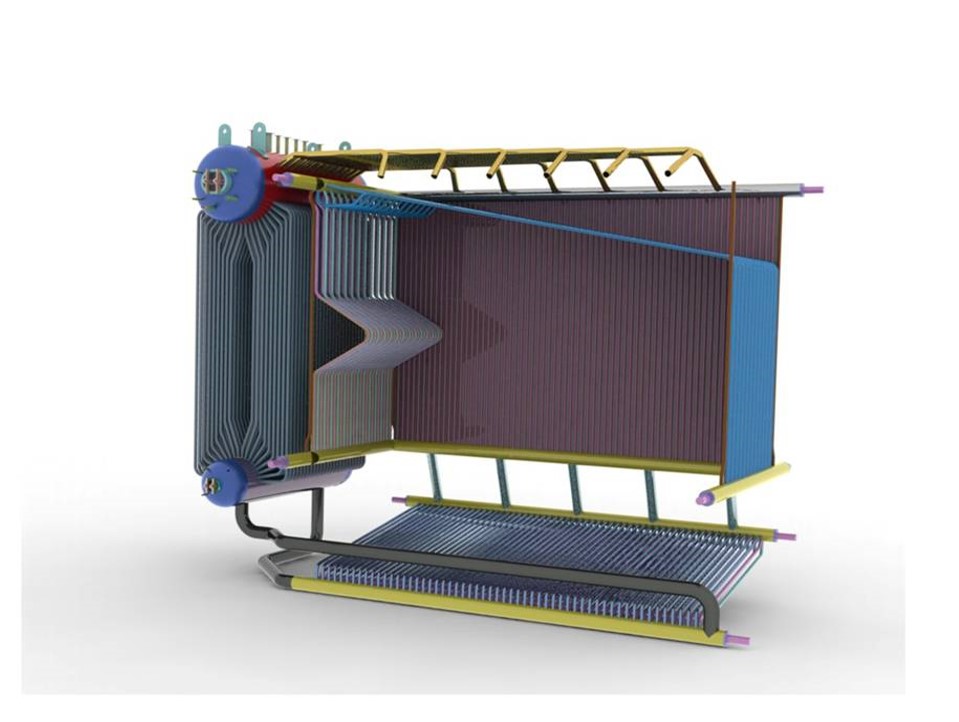
India's leading water tube boiler manufacturers include Par Boiler Pvt. Ltd., Thermax, Cheema Boilers, Forbes Marshall, Veesons Energy Systems, and Industrial Boilers Ltd. (IBL). Water tube boilers operate at high pressures (20–90+ kg/cm²) and large capacities (2–500+ TPH) using coal, biomass, gas, or oil. They are the standard boiler type for sugar mills, paper plants, textile industries, chemical plants, and power generation. When selecting a water tube boiler manufacturer, evaluate IBR certification, circulation ratio design, fuel flexibility, after-sales service, and reference installations in your specific industry.
The difference between a fire tube boiler and a water tube boiler is not just a design preference. It is a fundamental engineering choice that determines how much pressure the system can safely contain, how fast it responds to load changes, whether superheated steam is achievable, and which fuels can be efficiently burned. Get this choice wrong and you have either an oversized system at unnecessary capital cost or an undersized system that cannot safely reach the operating conditions your process demands.
Water tube boilers are the preferred design when the application requires high pressure (above 20 kg/cm²), large steam output (above 10 TPH), superheated steam for turbine operation, or solid fuel combustion in FBC or CFBC designs. They dominate the sugar, paper, textile, chemical, and power generation sectors in India. This guide covers what makes a water tube boiler work, what to look for in a manufacturer, and which companies in India have the engineering track record to deliver one that performs as specified for twenty years. For the full technical breakdown of design variants and their advantages, see our companion guide on water tube boiler working, types, and advantages.
A water tube boiler is an industrial steam boiler in which water and steam flow inside the tubes and hot combustion gases flow over the outside. The furnace is lined with water-cooled membrane wall tubes that absorb radiant heat from the flame. Downstream tube banks absorb convective heat from the flue gases. Natural circulation drives steam-water mixture from the evaporator tubes to the steam drum at the top, where steam and water separate. Water tube boilers operate at pressures from 20 kg/cm² to 90+ kg/cm² and steam outputs from 2 TPH to 500+ TPH, making them the standard choice for high-pressure, high-capacity, and superheated steam industrial applications.
Understanding the natural circulation principle is the key to understanding water tube boiler design. The system is self-driving no circulation pump is needed in a natural circulation design.
Heated risers and unheated downcomers: The evaporator tubes on the furnace walls and in the convective tube bank are heated by combustion gases. Water inside these tubes absorbs heat, and steam bubbles form producing a steam-water mixture with lower density than plain water. This low-density mixture rises naturally through the riser tubes to the steam drum at the top.
Downcomer circulation: Unheated downcomer tubes carry cooler, denser water from the steam drum down to the mud drum (in a bi-drum design) or lower headers (in a single-drum design). The density difference between the heated risers and cooled downcomers drives continuous natural circulation without any pump. The circulation ratio the ratio of water flow to steam generated is typically 10:1 to 25:1 in natural circulation designs, ensuring tubes remain fully wetted and cooled.
Steam drum separation: The steam-water mixture entering the steam drum passes through cyclone separators and demisters that remove water droplets, producing dry saturated steam. Superheater tubes (in designs requiring superheated steam) further raise the steam temperature above saturation before it exits to the process or turbine.
Mud drum function: In bi-drum designs, the mud drum at the bottom of the tube bank collects water from the downcomers, provides a settling point for suspended solids and sludge, and distributes water evenly into the lower ends of the riser tube bank. Intermittent bottom blowdown from the mud drum removes accumulated sludge.
For a complete technical deep-dive into steam drum design and function, see our guide on the steam drum boiler — working principle, design, and functions.
| Type | Pressure Range | Capacity | Fuel | Best Application |
|---|---|---|---|---|
| D-Type Single Drum | 10 – 25 kg/cm² | 2 – 15 TPH | Gas, oil, diesel | Chemical, food, pharma — quick install |
| Bi-Drum (AFBC) | 15 – 45 kg/cm² | 5 – 50 TPH | Coal, biomass, multi-fuel | Textile, rice mills, sugar, paper |
| CFBC | 25 – 65 kg/cm² | 15 – 200 TPH | Coal, biomass, multi-fuel | Large sugar, paper, power plants |
| Corner Tube / O-Type | 10 – 25 kg/cm² | 3 – 20 TPH | Gas, oil | Packaged gas/oil industrial boilers |
| A-Type | 40 – 90+ kg/cm² | 50 – 500+ TPH | Coal, gas, oil | Power generation, large co-gen |
| HRSG | 20 – 100 kg/cm² | 10 – 500+ TPH | Gas turbine exhaust | Combined cycle, co-generation |
| Parameter | Water Tube Boiler | Fire Tube Boiler |
|---|---|---|
| Fluid in tubes | Water and steam | Hot combustion gases |
| Max pressure | 90+ kg/cm² (small tubes handle high pressure) | 18–21 kg/cm² max |
| Steam capacity | 2 – 500+ TPH | 0.5 – 25 TPH |
| Superheated steam | Yes superheater section possible | Limited |
| Load response | Fast small water volume in tubes | Slower — large water volume |
| Solid fuel capability | Excellent FBC, CFBC, stoker designs | Limited |
| Capital cost | Higher | Lower |
| Best for | High pressure, large capacity, solid fuel, turbine steam | Low-medium pressure, small-medium, gas/oil |
For a detailed comparison across all selection parameters, see our complete guide on water tube boiler vs fire tube boiler.
Par Boiler Pvt. Ltd. is one of India's most established water tube boiler manufacturers, designing and manufacturing single-drum and bi-drum 100% water tube steam boilers from its Ahmedabad facility for over 25 years. Established in 1996 and headquartered in Sanand, Gujarat, the company specialises in Fluidized Bed Combustion (FBC) water tube boilers, corner tube single-drum designs, and bi-drum water tube systems for solid fuel, biomass, gas, and oil firing across capacities from 5 TPH to 30 TPH at operating pressures up to 45 kg/cm².
Par Boiler's water tube boiler range specifically includes: 4-pass single drum water tube boilers for solid fuel, single drum corner tube boilers, bi-drum water tube boilers, and D-type single/bi-drum boilers for oil and gas firing. Every boiler is fabricated from IBR-certified pressure vessel steel, inspected at each fabrication stage, hydraulic tested at 1.5× design pressure, and dispatched with complete IBR documentation. The company's bi-drum design uses a 100% membrane water wall furnace that eliminates refractory maintenance and improves heat transfer efficiency compared to partial membrane designs see our dedicated specification guide on the high efficiency bi-drum 100% water tube steam boiler.
Beyond the boiler itself, Par Boiler supplies the complete integrated system furnace and combustion system, air pollution control equipment (cyclone, bag filter), ash handling, and water treatment recommendations from a single engineering team, preventing the interface problems that arise when different suppliers handle these connected systems.
Best for: Textile, rice mill, chemical, food processing, pharmaceutical, and general industrial applications in Gujarat and pan-India requiring IBR-certified solid fuel or gas/oil water tube boilers from 5–30 TPH.
Need a water tube boiler matched to your specific fuel, capacity, and pressure requirement? Par Boiler's engineering team reviews your process steam demand before recommending a configuration. Contact Par Techno-Heat Pvt. Ltd. for a free technical consultation.
Founded in 1980 and headquartered in Pune, Thermax is one of India's largest energy and environment solutions providers. Their water tube boiler range covers biomass fired, waste-to-energy, lean gas fired, and waste heat recovery boilers for large-scale process industries and power plants, backed by strong sustainability engineering credentials.
Best for: Large-scale power plant and process industry boilers requiring full energy management system integration.
Established in 1999, Cheema Boilers has built a strong track record in AFBC (Atmospheric Fluidised Bed Combustion) and CFBC (Circulating FBC) water tube boilers for sugar, paper, and power plant applications. Their systems are designed for high-capacity, high-pressure solid fuel combustion with multi-fuel capability.
Best for: Sugar mills, paper plants, and power stations requiring large-capacity AFBC/CFBC water tube designs.
With over seven decades of experience in steam engineering and process efficiency, Forbes Marshall supplies water tube boilers, HRSGs, and process boilers with particular depth in steam system optimisation and instrumentation integration.
Best for: Process industries requiring water tube boilers integrated with comprehensive steam management and instrumentation systems.
Veesons specialises in custom-engineered thermal systems including water tube boilers and solid fuel combustion equipment, with a focus on process industries requiring non-standard configurations beyond catalogue product ranges.
Best for: Process industries needing custom-engineered water tube solutions for specific solid fuel and capacity requirements.
With over 50 years of manufacturing experience, IBL offers water tube boilers, thermic fluid heaters, and hot water generators as part of a broad industrial heating equipment range, serving textile, food, chemical, and pharmaceutical sectors.
Best for: Plants seeking single-source supply of water tube boilers alongside thermic fluid heaters and hot water generators.
| Manufacturer | Est. | Key Products | Capacity Range | Core Strength |
|---|---|---|---|---|
| Par Boiler Pvt. Ltd. | 1996 | FBC, bi-drum, D-type, corner tube WT boilers | 5 – 30 TPH | Custom engineering, solid fuel + gas/oil, full APC integration |
| Thermax | 1980 | Biomass, waste-to-energy, WHR, large WT boilers | 10 – 500+ TPH | Large-scale, sustainability engineering |
| Cheema Boilers | 1999 | AFBC, CFBC, biomass water tube | 10 – 200 TPH | High-capacity FBC/CFBC, sugar and paper |
| Forbes Marshall | 1950s | Process boilers, HRSGs, WHR | 5 – 100 TPH | Steam system optimisation, instrumentation |
| IBL | 1960s | Water tube, thermic fluid, hot water boilers | 5 – 100 TPH | Broad product range, long track record |
For a wider view of India's boiler manufacturing landscape beyond water tube specialists, our roundup of top 10 boiler manufacturers in India is a useful market reference.
| Industry | Typical Boiler Type | Pressure Required | Why Water Tube |
|---|---|---|---|
| Sugar & Distillery | Bagasse CFBC / bi-drum | 25 – 45 kg/cm² | Co-generation, high pressure for turbine |
| Paper & Pulp | Large bi-drum / CFBC | 30 – 65 kg/cm² | Large capacity, co-generation |
| Textile Industry | Bi-drum solid fuel / FBC | 15 – 25 kg/cm² | Solid fuel capability, medium-large capacity |
| Chemical Industry | High-pressure D-type or bi-drum | 25 – 65 kg/cm² | High pressure process requirement |
| Rice Mills (large) | Rice husk FBC bi-drum | 15 – 25 kg/cm² | Rice husk fuel FBC design needed |
| Power Generation | A-type or large bi-drum | 60 – 150+ kg/cm² | Superheated steam for turbine mandatory WT |
| Pharmaceutical | D-type gas fired | 10 – 20 kg/cm² | Fast load response for variable demand |
| Type | Capacity | Fuel | Approx. Price (₹) |
|---|---|---|---|
| D-Type Single Drum (Gas/Oil) | 2 – 8 TPH | Gas / Oil | ₹35 lakh – ₹90 lakh |
| Bi-Drum FBC (Biomass/Coal) | 5 – 15 TPH | Coal / Biomass | ₹85 lakh – ₹2.2 crore |
| Bi-Drum FBC (Biomass/Coal) | 15 – 30 TPH | Coal / Biomass | ₹2.2 crore – ₹5 crore |
| CFBC Water Tube | 20 – 50 TPH | Multi-fuel | ₹4 crore – ₹12 crore |
| Large Power Water Tube | 50 – 200 TPH | Coal / gas | ₹10 crore – ₹50 crore+ |
Prices are indicative 2026 estimates excluding civil foundation, installation, pollution control, and IBR fees. Contact Par Boiler for a site-specific quotation.
The checklist below covers water tube-specific selection criteria; for a broader 10-point framework applicable to any boiler purchase, see our boiler manufacturer selection checklist.
Comparing water tube boiler manufacturers for your plant? Par Boiler's engineering team reviews your steam output, operating pressure, and fuel before recommending a design. Contact Par Techno-Heat Pvt. Ltd. here.
| Design | Basic Efficiency | With Economiser | With Economiser + APH |
|---|---|---|---|
| D-Type (Gas/Oil) | 80 – 84% | 85 – 88% | 87 – 91% |
| Bi-Drum AFBC (Biomass/Coal) | 82 – 86% | 86 – 89% | 88 – 92% |
| CFBC (Multi-fuel) | 85 – 88% | 88 – 91% | 90 – 93% |
For practical steps to improve boiler efficiency in an operating water tube boiler installation, see our guide on how to improve boiler efficiency. Sustaining that efficiency over the boiler's life also depends on disciplined upkeep — our industrial boiler maintenance checklist covers the daily, weekly, monthly, and annual tasks that keep a water tube system performing near its design efficiency.
A water tube boiler is an industrial steam boiler in which water and steam flow inside the tubes and hot combustion gases flow over the outside. The furnace walls are lined with water-cooled membrane tubes that absorb radiant heat. Natural circulation drives steam-water mixture to the steam drum at the top where steam separates. Water tube boilers operate at 20–90+ kg/cm² and 2–500+ TPH, making them ideal for high-pressure, high-capacity industrial applications.
Par Boiler Pvt. Ltd., Thermax, Cheema Boilers, Forbes Marshall, Veesons Energy Systems, and Industrial Boilers Ltd. (IBL) are among the most trusted. Par Boiler specifically manufactures bi-drum and D-type water tube boilers from 5–30 TPH in Ahmedabad with IBR certification and full APC integration capability.
In a water tube boiler, water is inside the tubes and hot gases are outside. In a fire tube boiler, hot gases pass inside the tubes and water surrounds them outside. Water tube boilers reach 90+ kg/cm² pressure and 500+ TPH capacity; fire tube boilers are limited to 18–21 kg/cm² and 25 TPH. Water tube boilers are required for high pressure, large capacity, superheated steam, and solid fuel FBC applications.
A bi-drum water tube boiler has a steam drum at the top and a mud drum at the bottom, connected by the evaporator tube bank. Water flows from the steam drum down through downcomers to the mud drum, then up through heated riser tubes as steam-water mixture back to the steam drum. The bi-drum design provides good natural circulation, large water storage capacity, and is well-suited for solid fuel and large capacity applications above 5 TPH.
Water tube boilers are designed for gas (natural gas, LPG), oil (diesel, LDO, furnace oil), coal (various grades), biomass (rice husk, bagasse, wood chips, agro-waste), and multi-fuel combinations. FBC (Fluidized Bed Combustion) water tube boilers can efficiently burn fuels with high ash content like rice husk (18–22% ash) and low-grade coal (25–40% ash) that cause grate clinker problems in conventional designs.
In a natural circulation water tube boiler, the flow of steam-water mixture through the evaporator tubes is driven by the density difference between the lighter steam-water mixture in heated riser tubes and the denser cooler water in unheated downcomer tubes without any circulation pump. Natural circulation is self-regulating: more heat input creates more steam, reduces mixture density, and increases circulation rate automatically.
All water tube boilers above the IBR threshold require CBB design approval, certified pressure vessel materials, stage inspection during fabrication, hydraulic testing at 1.5× working pressure, and annual IBR inspection during operation. The steam drum and mud drum must have separate IBR Steam Vessel Certificates. Par Boiler supplies fully IBR-certified water tube boilers with complete documentation for registration and periodic inspection compliance.
Water tube boiler prices range from ₹35 lakh for small 2–8 TPH D-type gas/oil boilers to ₹50 crore and above for large 100+ TPH coal power boilers. A 10 TPH biomass FBC bi-drum water tube boiler typically costs ₹1.5–₹2.5 crore. Price depends on capacity, fuel type, operating pressure, and automation level.
FBC (Fluidized Bed Combustion) is a combustion technology where fuel burns in a turbulent bed of hot sand (bed material) at 750–900°C. The fluidised bed achieves very uniform temperature distribution, 88–96% combustion efficiency with high-ash fuels, and SO₂ reduction through limestone injection. FBC water tube boilers are the standard design for rice husk, coal, and multi-fuel solid fuel firing in India.
Water tube boilers achieve 82–86% thermal efficiency at basic design; with an economiser added this rises to 86–89%; with economiser plus air preheater, 88–92% is achievable. CFBC designs achieve slightly higher base efficiency (85–88%) due to better combustion at scale. Each 1% efficiency improvement on a 10 TPH coal boiler saves approximately ₹50,000–₹80,000 per month in fuel cost.
Yes. A superheater tube bank placed in the high-temperature flue gas zone ahead of the main evaporator tube bank heats saturated steam above saturation temperature to produce superheated steam at the specified temperature and pressure. Superheated steam is required for steam turbine applications because the moisture content of saturated steam would rapidly erode turbine blades.
The circulation ratio is the ratio of total water flow through the evaporator tubes to the steam generated typically 10:1 to 25:1 in natural circulation designs. A higher circulation ratio means more water flows through the tubes relative to the steam generated, keeping tube surfaces fully wetted and preventing overheating. At low circulation ratio, steam blanketing of tube surfaces can cause local overheating and tube failure.
CFBC (Circulating Fluidized Bed Combustion) water tube boilers firing bagasse at 25–45 kg/cm² are the standard specification for sugar mills. High-pressure steam from the boiler drives a backpressure turbine for co-generation electricity, with the turbine exhaust steam (at 3–5 kg/cm²) serving process heating. The 30–60 TPH capacity range is typical for Indian sugar factories of 2,500–10,000 TCD capacity.
A corner tube boiler is a water tube design where the waterwall tubes are connected to corner headers rather than top and bottom drums, creating a box-shaped furnace that maximises furnace volume within a compact footprint. Par Boiler manufactures single drum corner tube boilers as part of its solid fuel fired water tube range, combining the high-pressure capability of water tube design with a relatively compact plant footprint.
AFBC (Atmospheric Fluidized Bed Combustion) uses a bubbling bed of sand where fuel burns in a relatively slow-moving fluidized bed. CFBC (Circulating FBC) uses high-velocity fluidization that carries particles out of the furnace through a cyclone separator that returns them to the bed for further combustion. CFBC achieves higher combustion efficiency, better SO₂ control (with limestone), and is better suited for larger capacities above 20 TPH. AFBC is preferred for smaller capacities where the operational simplicity is a practical advantage.
A well-maintained water tube boiler with good feed water quality, regular IBR inspection, and timely tube replacement as needed typically lasts 20–30 years. The steam drum and mud drum are expected to last the full boiler life. Evaporator tubes may require replacement in sections after 10–15 years depending on fuel ash abrasiveness, water quality, and operating temperature cycling.
For solid fuel (coal, biomass) water tube boilers, CPCB requires: a multi-cyclone separator for coarse fly ash removal, followed by a pulse jet bag filter or ESP to achieve PM emission within consent conditions. The bag filter media must be rated for the boiler's actual flue gas temperature. For SO₂ control on high-sulfur coal, a wet scrubber or dry injection system may additionally be required. See our APC solutions guide for details.
The mud drum is the lower drum in a bi-drum water tube boiler design. It sits at the bottom of the evaporator tube bank and collects water flowing down from the steam drum through the downcomer tubes. The mud drum distributes water evenly into the lower ends of the evaporator tube bank and provides a settling point for suspended solids and sludge in the boiler water. Periodic bottom blowdown from the mud drum removes accumulated sludge.
High-pressure water tube boilers have stricter feed water quality requirements than fire tube designs because tube diameters are smaller, any scale deposits cause proportionally higher tube temperature increases. Typical requirements: hardness less than 0.5 ppm, dissolved oxygen less than 0.007 ppm (after deaeration and chemical scavenging), silica less than 0.2 ppm at high pressure, and pH 8.5–9.5. Deaerators, softeners, and chemical dosing systems must be sized appropriately.
Calculate your peak simultaneous steam demand from all connected processes — not the average daily demand, but the maximum demand that occurs simultaneously in the worst-case operating scenario. Add 15–20% margin for future load growth and annual efficiency decline. If your peak demand is 7 TPH, a 8–9 TPH boiler is the right specification a 5 TPH unit cannot meet peak demand, and a 10 TPH unit runs at 70% load with reduced efficiency at normal operation.
Par Techno-Heat Pvt. Ltd. designs and manufactures bi-drum and D-type water tube steam boilers solid fuel FBC, biomass, gas, and oil configurations from 5 TPH to 30 TPH at pressures up to 45 kg/cm², with IBR certification and integrated APC and ash handling supply across India.
A 20-minute technical discussion covers your steam output, pressure, fuel, and process requirement before any system is proposed.
