

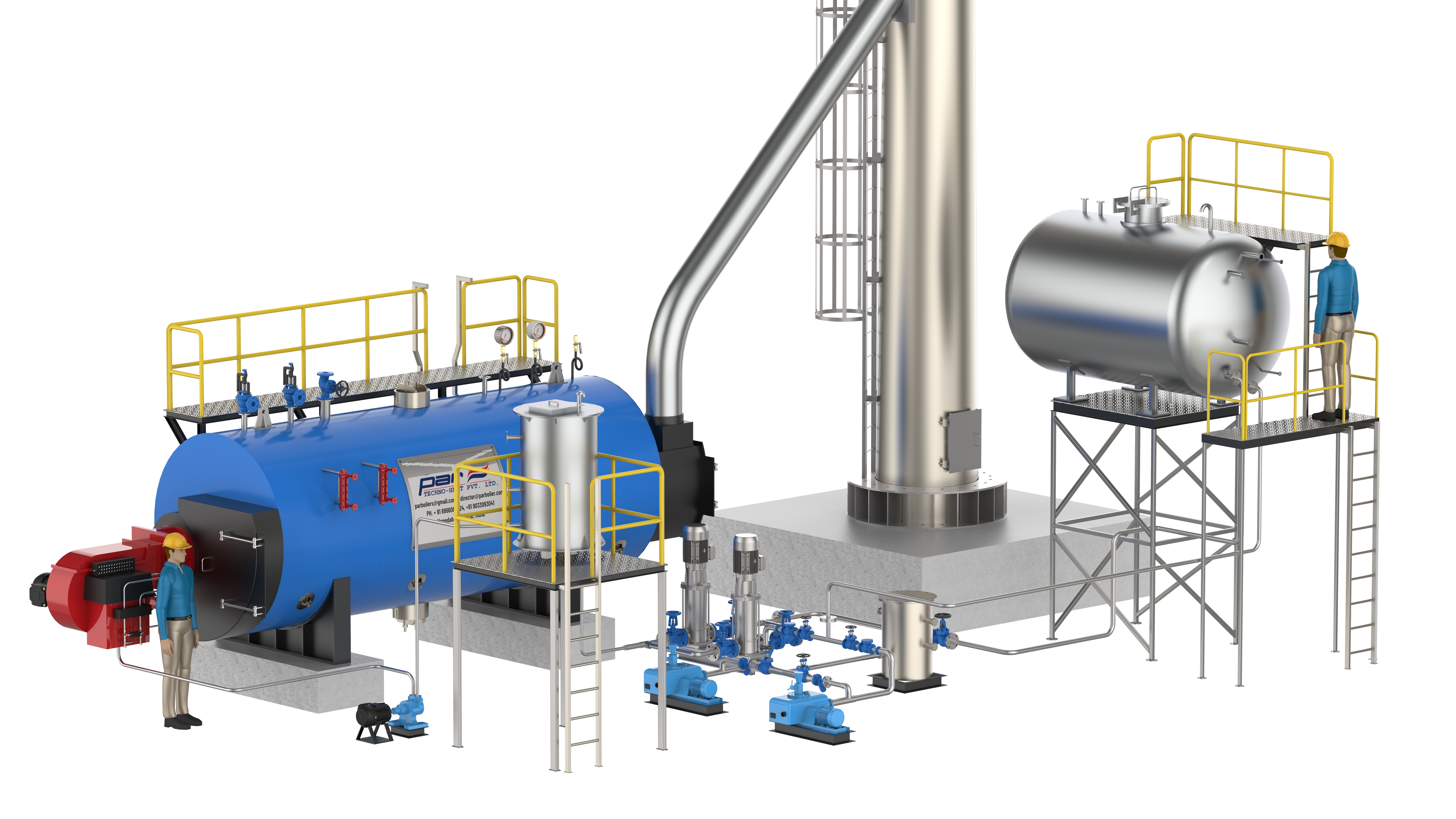
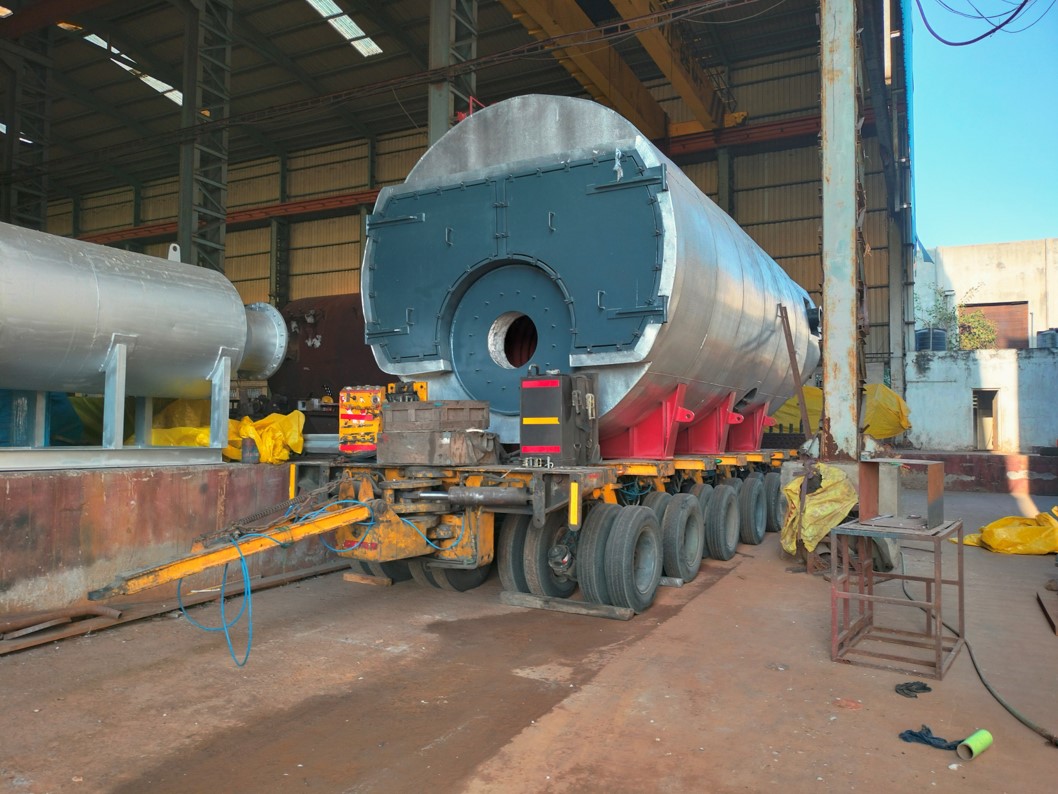
A 3/5 Pass Horizontal Smoke Tube Wetback Boiler is a 100% smoke-tube industrial steam boiler in which hot combustion gases travel through horizontal tubes submerged in boiler water, transferring heat to the water as they pass through three or five successive heat-transfer passes before exiting. “Wetback” refers to the rear turnaround chamber, where the gases reverse direction into the next pass in this design, that chamber is water-cooled rather than lined with refractory. Combined with a corrugated integral furnace, this construction is built for oil and gas fired industrial steam generation at low-to-medium capacity and pressure.
Product Highlights
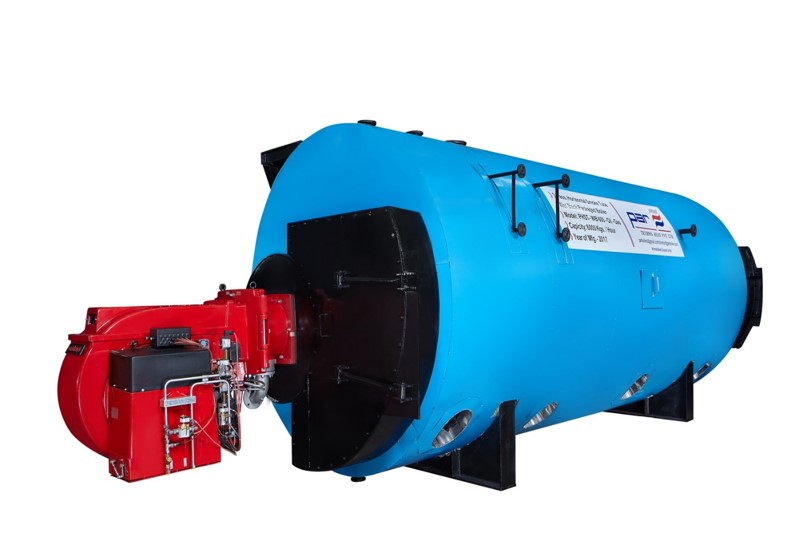
Design & Construction
Horizontal Smoke Tube Design: Hot combustion gases pass through horizontal tubes that run through the boiler shell, while water surrounds the outside of the tubes and absorbs the heat as the gases move through. This is the reverse of a water-tube arrangement, where water is inside the tubes instead.
3/5 Pass Configuration: Each “pass” is one length of travel the flue gas makes through the boiler before being redirected. Routing gas through three or five passes rather than releasing it after one gives the gas more contact time and surface area to give up heat, which is a major factor in the unit's overall thermal performance.
Wetback Design: The rear turnaround chamber, where gas reverses direction between passes, is water-cooled rather than refractory-lined. This keeps that section actively absorbing heat rather than losing it to a static lining, supports more complete heat recovery from the gas stream, and reduces direct refractory exposure to the hottest combustion zone which can also reduce refractory maintenance over time.
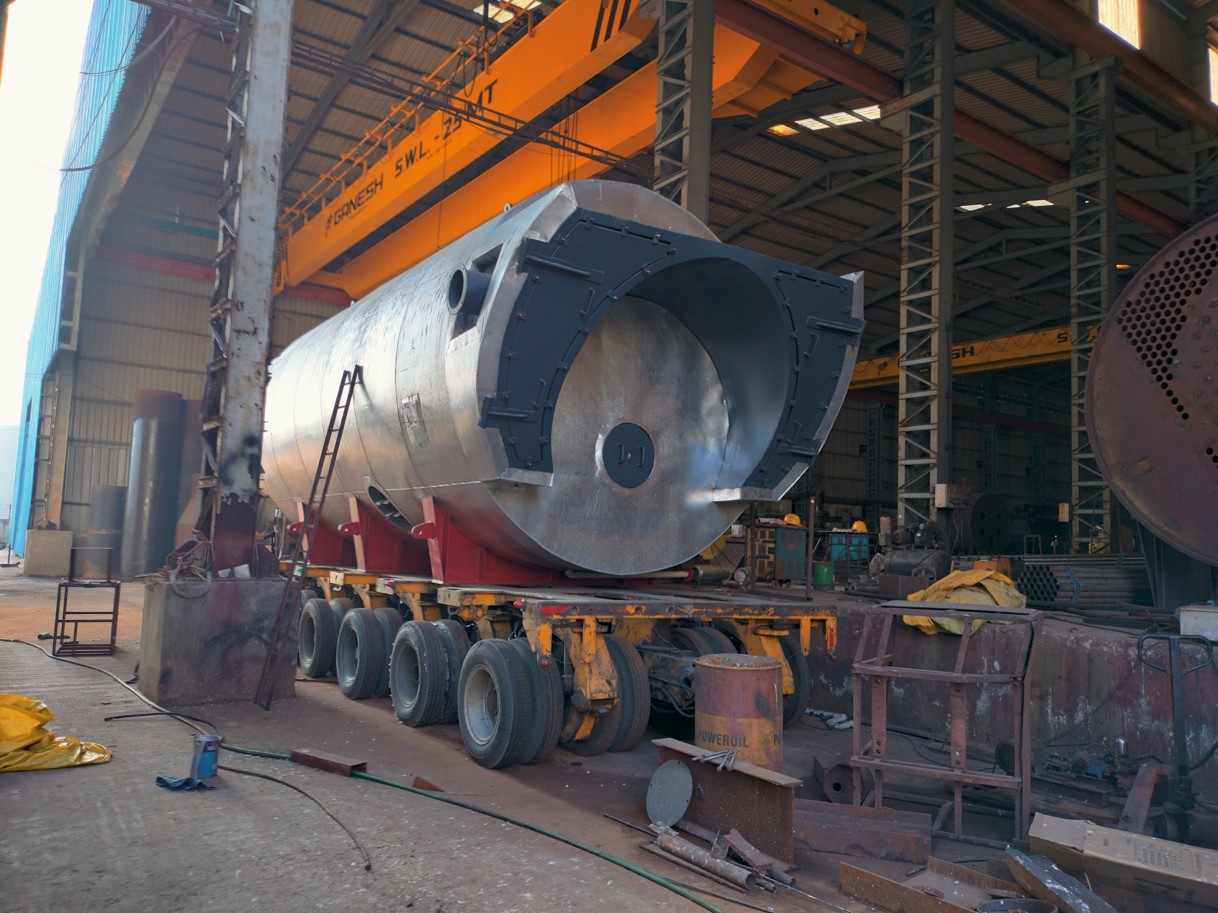
Corrugated Integral Furnace: The furnace tube is corrugated rather than smooth-walled. The corrugations allow the furnace to expand and contract with thermal cycling more freely, which helps manage the mechanical stress of repeated heating and cooling, while also increasing the furnace's surface area for heat transfer.
Working Principle
Efficiency & Performance
Actual thermal performance is shaped by several factors working together rather than any single design element: the multi-pass arrangement extends the gas-side heat-transfer path, the wetback design recovers heat that would otherwise be lost at the turnaround, and the corrugated furnace adds usable heat-transfer surface. Beyond design, performance in the field depends on combustion quality and air-fuel ratio, cleanliness of the heat-transfer surfaces (both fireside and waterside), feedwater quality, burner condition and tuning, and the boiler's actual load profile relative to its rated capacity. Two identically designed units can perform differently if one is poorly maintained or run well outside its intended load range so specific efficiency figures depend on the finalized project configuration and operating conditions rather than the boiler type alone.
Maintenance & Inspection
Routine upkeep on this boiler type typically covers several areas. Smoke tube inspection checks for soot buildup, scale, or tube-wall wear that reduces heat transfer over time. Fireside cleaning removes soot and combustion deposits from the tube surfaces, while waterside inspection watches for scale buildup linked to feedwater quality. The burner should be inspected and tuned periodically to maintain stable combustion, and the furnace and wetback/rear turnaround section should be checked for wear given their exposure to combustion heat. Safety valves, water-level controls, and instrumentation need periodic verification as part of standard boiler safety practice. Cleaning frequency and the scope of annual shutdown work depend on fuel quality, operating hours, load, water treatment, and how quickly fouling or deposition builds up in a given installation these intervals aren't fixed across every site.
Applications
This boiler is used where a plant needs continuous, moderate-capacity steam rather than a large central utility. Manufacturing and general process industries use it for process heating and utility steam; food processing plants rely on steam for cooking, sterilization, and cleaning-in-place processes; pharmaceutical manufacturing needs steam for sterilization and process control where reliability matters; chemical processing uses steam as a process input or heat-transfer medium; and textile plants use it for dyeing, finishing, and drying operations. Commercial facilities with laundry, HVAC, or hot-water needs also fall in this range. Final suitability for any of these depends on the site's actual steam demand, required pressure, fuel availability, and plant layout not the application category alone. For plants outside this capacity range, a 4 Pass Single Drum Water Tube Boiler may be a more suitable water-tube alternative depending on solid-fuel availability and capacity needs.
Fuel & Combustion
The boiler is designed for oil and gas firing, with burner selection matched to the specific fuel and combustion duty at the time of order. Stable combustion depends on maintaining the correct air-fuel ratio, consistent fuel quality and supply pressure, and a well-tuned burner producing a stable flame across the operating range. Combustion control systems help maintain this balance as load changes. Regular burner maintenance checking nozzles, ignition components, and flame-sensing equipment supports consistent combustion efficiency and reduces the risk of incomplete combustion, which affects both fuel consumption and emissions.
Emission Control
Emission levels from an oil- or gas-fired boiler depend on the fuel used, the burner technology fitted, combustion conditions, operating load, and the emission regulations applicable at the installation site. Low-NOx burner technology is available as a design consideration for projects that need it, rather than a feature fitted as standard on every unit whether it's included depends on the specific project's regulatory requirements. Buyers with strict local emission limits should confirm burner and combustion specifications against their applicable standards during the quotation stage.
Customization & Scalability
The boiler can be configured to project-specific steam capacity and pressure requirements within its rated range, with burner type, fuel arrangement, automation level, and auxiliary equipment selected based on the application. Plant layout, available installation space, and maintenance access can all factor into the final equipment arrangement. Buyers evaluating alternative configurations for example, where a D-type layout suits the plant footprint better may also want to review the Single/Bi Drum D Type Boiler as another oil/gas-fired option in the same product range. Specific automation and control packages are subject to engineering design based on the buyer's operational requirements.
Economic Considerations for Industrial Buyers
Before requesting a quotation, industrial buyers should have a clear view of their required steam capacity and pressure, expected fuel cost and availability (oil versus gas pricing and supply reliability vary by region), typical operating hours and load pattern, and water treatment requirements, since feedwater quality affects both performance and maintenance cost over the boiler's service life. Burner efficiency and maintenance needs factor into lifecycle cost alongside the initial equipment price, and it's worth confirming spare-parts availability and service support from the manufacturer before committing. Plants anticipating future capacity growth should also flag that during the initial engineering discussion, since it can affect boiler sizing and layout decisions. Facilities looking to recover additional heat from flue gases already leaving a boiler system may also want to evaluate a Waste Heat Recovery Steam Generator as a complementary addition rather than a replacement.
Safety & Compliance
Safe operation depends on proper pressure protection (safety valves sized and set correctly for the unit), reliable water-level monitoring to prevent low-water conditions, a functioning burner management system, and combustion controls that respond correctly to changing load. Regular inspection and preventive maintenance of these systems is standard practice for any fired pressure vessel. Applicable standards and statutory requirements depend on the installation location and project specifications, and should be confirmed with the manufacturer and local regulatory authority for the specific site before installation.
1. What is a 3/5 Pass Horizontal Smoke Tube Wetback Boiler?
It's a 100% smoke-tube industrial steam boiler where hot combustion gases pass through horizontal tubes submerged in water across three or five heat-transfer passes, with a water-cooled wetback turnaround chamber between passes instead of a refractory-lined one. Combined with a corrugated furnace, it's built for oil and gas fired steam generation up to 20 TPH and 21 ksc, suited to industrial and commercial process-steam needs.
2. How does a 3/5 pass smoke tube boiler work?
Fuel combustion in the furnace produces high-temperature flue gases, which travel through the first pass inside the furnace tube, then get redirected by the wetback chamber into subsequent passes. As the gases move through each pass, heat transfers through the tube walls into the surrounding boiler water, converting it to steam. After giving up heat across all passes, the cooled flue gases exit toward the stack.
3. What is the difference between a 3-pass and 5-pass boiler?
The number of passes refers to how many times the flue gas travels through the boiler's heat-transfer surface before exiting. A 5-pass design routes the gas through two more passes than a 3-pass design, extending its contact time and surface area for heat exchange. This generally supports more complete heat recovery from the same volume of combustion gas, though actual gains depend on the specific boiler's construction and operating conditions.
4. What is a wetback design in a smoke tube boiler?
A wetback design means the rear turnaround chamber where flue gas reverses direction between passes is surrounded by boiler water rather than lined with refractory brick. This keeps that section actively transferring heat into the water instead of losing it through a static lining, supports better overall heat recovery, and reduces the refractory maintenance associated with dryback designs.
5. What fuels can be used in a horizontal smoke tube wetback boiler?
This boiler is designed for oil and gas firing, with the burner selected and tuned to match the specific fuel and combustion duty required for the project. Exact fuel grade and burner specification are finalized based on local fuel availability and the buyer's operational requirements rather than fixed to one fuel type.
6. What industries use 3/5 pass horizontal smoke tube boilers?
They're used across manufacturing, food processing, pharmaceutical manufacturing, chemical processing, textile plants, and commercial facilities needing reliable process or utility steam at low-to-medium capacity. The right fit depends on the plant's actual steam demand, required pressure, and fuel availability rather than the industry alone, since needs vary significantly even within the same sector.
7. What maintenance does a wetback smoke tube boiler require?
Routine maintenance includes fireside cleaning of the smoke tubes, waterside inspection for scale, burner inspection and tuning, and periodic checks of the furnace and wetback section given their exposure to combustion heat. Safety valves, water-level controls, and instrumentation also need regular verification. Maintenance frequency depends on fuel quality, operating hours, load, and water treatment rather than a single fixed schedule.
8. How do I select the right smoke tube boiler for my industrial plant?
Start with your required steam capacity and pressure within this boiler's up-to-20-TPH, up-to-21-ksc range, then factor in fuel type and availability (oil versus gas), operating hours, load pattern, and feedwater quality. Available installation space and maintenance access matter for layout planning, and it's worth discussing spare-parts support and applicable local compliance requirements with the manufacturer's engineering team before finalizing a specification.
