



A Reciprocating Grate Furnace is a solid-fuel combustion system that uses mechanically moving grate sections to push, agitate, and transport fuel through the combustion zone while controlled air supports combustion from beneath. Rather than fuel resting on a fixed surface, sections of the grate move back and forth in a reciprocating motion, continuously advancing fuel toward discharge while breaking up the fuel bed to expose fresh surfaces to combustion air. This mechanical action makes reciprocating grate technology well suited to a range of solid fuels, including coal and various biomass sources, and it integrates directly with industrial boilers to support steam generation or process heating. Par Boiler provides Reciprocating Grate Furnaces for industrial boiler applications, taking an application-specific engineering approach that accounts for each project's fuel type, boiler capacity, and operating requirements rather than offering a single fixed design. Reciprocating grate systems are typically chosen where continuous, mechanically assisted fuel movement and ash discharge are needed for sustained industrial combustion.
What Is a Reciprocating Grate Furnace?
A Reciprocating Grate Furnace is a solid-fuel combustion system that uses mechanically moving grate sections to transport and agitate fuel through the combustion zone while controlled air supports combustion. It is commonly integrated with industrial boilers for suitable coal and biomass fuels. The reciprocating mechanism works through alternating grate bars or sections that move back and forth relative to one another, which advances fuel along the grate in steps while simultaneously turning and breaking up the fuel bed. This agitation helps expose fresh fuel surfaces to combustion air supplied from beneath the grate, supporting more thorough combustion than a static bed would allow. As combustion proceeds and fuel is consumed, the reciprocating motion continues to advance the remaining ash toward the discharge end of the furnace, where it is removed. This design allows the furnace to operate continuously, with the boiler drawing heat from combustion taking place along the length of the moving grate.
How Does a Reciprocating Grate Furnace Work?
A Reciprocating Grate Furnace works by mechanically moving grate sections that advance and agitate solid fuel through ignition, combustion, and ash discharge as controlled air is supplied from beneath. The process generally follows these stages:
Fuels Suitable for Reciprocating Grate Furnaces
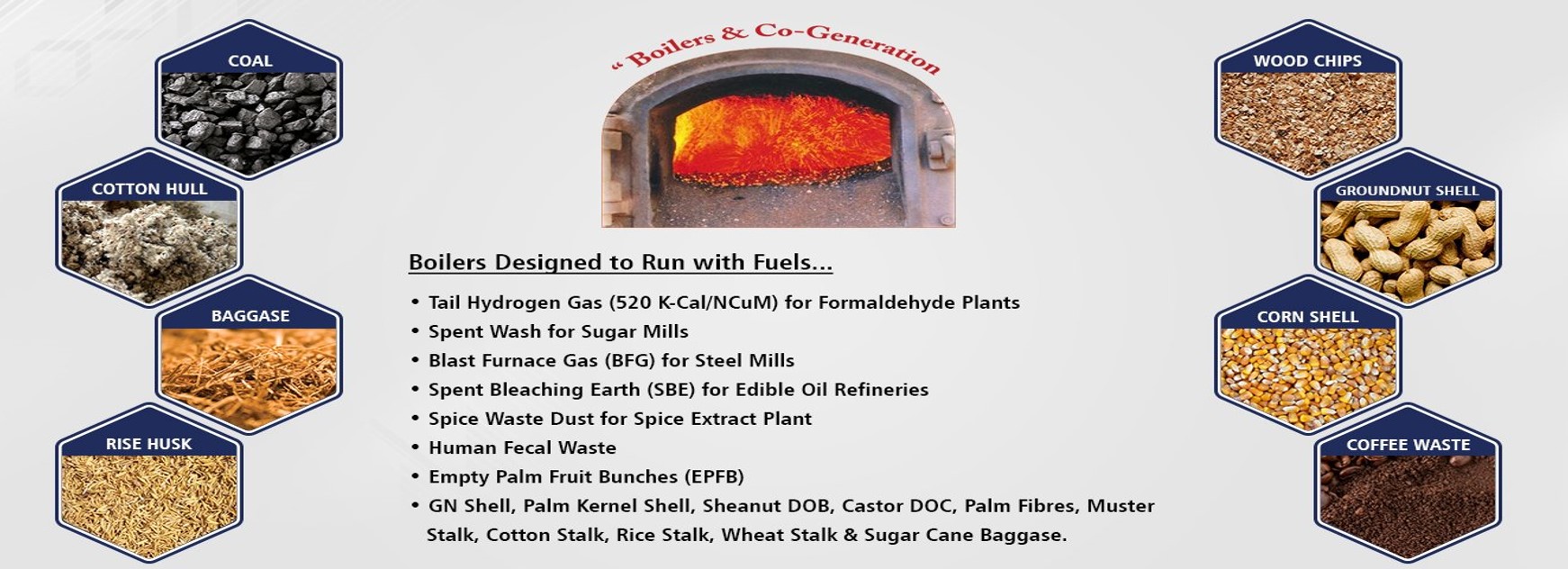
Reciprocating Grate Furnaces are generally designed around solid fuels such as coal and biomass, including bagasse, rice husk, groundnut shell, wood chips, coconut shell, and various crop residues or agro-waste materials. Not every fuel is automatically suitable for every furnace, however — compatibility depends on factors including moisture content, particle size, ash content, calorific value, bulk density, and overall fuel composition and consistency, all of which affect how a fuel behaves as it is mechanically agitated and advanced along the grate. Grate design and furnace configuration are typically matched to the intended fuel rather than assumed to work universally, which is why fuel characteristics are reviewed carefully as part of furnace selection.
Key Features of Reciprocating Grate Furnaces
Reciprocating Grate Furnaces are built around mechanical fuel movement, with reciprocating grate action combined with controlled fuel distribution and controlled combustion air to support continuous solid-fuel combustion. The mechanical movement of the grate keeps fuel and ash advancing through the furnace, which reduces the need for manual fuel handling compared to static combustion methods. These systems are designed for a range of solid fuels and built with robust construction suited to continuous industrial operation, with the reciprocating mechanism also supporting continuous ash movement toward discharge. This makes the technology adaptable to integration with industrial boiler systems across various capacities and applications.
Advantages of a Reciprocating Grate Furnace
The core advantage of a Reciprocating Grate Furnace lies in its mechanical movement of fuel and ash, which supports continuous combustion without requiring constant manual intervention. The reciprocating action agitates the fuel bed as it advances, which can support better handling of certain biomass and solid fuels compared to combustion methods that rely on a static fuel bed. This mechanical movement also supports more controlled combustion conditions along the grate, since fuel exposure to air is actively managed rather than left to a fixed arrangement. Reduced manual fuel handling lowers labor demands during operation, and because reciprocating grate furnaces can be engineered around a project's specific fuel and boiler requirements, they offer meaningful operational flexibility and application-specific customization for suitable industrial boiler applications. As with any solid-fuel combustion technology, actual performance depends on fuel characteristics and furnace design rather than a fixed, universal outcome.
Reciprocating Grate Furnace Applications
Reciprocating Grate Furnaces are used across industries that depend on steam or thermal energy generated from solid fuel combustion, including the sugar industry, textile industry, paper and pulp industry, food processing, rice mills, and broader agro-processing and biomass processing operations. They are also relevant to pharmaceutical and chemical industries with steam generation needs, as well as general manufacturing plants and process industries requiring continuous industrial steam generation from coal or suitable biomass fuel. The specific fit for a given facility depends on its fuel type, thermal requirements, and existing boiler infrastructure.
How to Select the Right Reciprocating Grate Furnace
Selecting the right Reciprocating Grate Furnace for an industrial application depends on a number of project-specific factors that are best evaluated together. Fuel type, moisture content, calorific value, ash characteristics, and particle size all influence how a fuel behaves as it is agitated and advanced along the grate, while fuel availability affects whether a consistent, ongoing supply can be maintained. Required steam generation, boiler operating pressure, and expected operating hours shape the scale and duty cycle the furnace needs to support, and fuel feeding and ash handling requirements determine how the furnace should be configured to work with existing plant infrastructure. Available installation space, any applicable emission-control requirements, and maintenance considerations round out the picture. These factors are typically discussed with the furnace manufacturer's engineering team to arrive at a configuration suited to the specific fuel and application.
Why Choose Par Boiler for Reciprocating Grate Furnace Solutions?
Par Techno-Heat Pvt. Ltd. brings industrial boiler and furnace engineering experience to Reciprocating Grate Furnace design, applying an application-specific approach rather than a single standard configuration. This includes solid fuel combustion expertise matched to each project's fuel characteristics, with furnaces engineered to integrate directly with the industrial boiler systems they serve. Par Boiler's project-oriented technical support and customized system approach are focused on reliable industrial operation, helping industrial buyers get a furnace suited to their actual fuel supply and boiler requirements rather than a generic product.
Looking for a Reciprocating Grate Furnace for your coal, biomass or other solid-fuel application? Contact Par Boiler to discuss your fuel characteristics, boiler capacity, operating requirements and application-specific furnace needs.
Frequently Asked Questions About Reciprocating Grate Furnace
1. What is a Reciprocating Grate Furnace?
A Reciprocating Grate Furnace is a solid-fuel combustion system that uses mechanically moving grate sections to transport and agitate fuel through the combustion zone while controlled air supports combustion. It is commonly integrated with industrial boilers for suitable coal and biomass fuels, supporting continuous operation.
2. How does a Reciprocating Grate Furnace work?
Fuel is fed onto the grate and advanced in steps by alternating, back-and-forth grate sections, which also agitate the fuel bed to expose fresh surfaces to combustion air. As fuel burns along the grate, heat transfers to the boiler, and remaining ash is discharged at the end.
3. What fuels can be used in a Reciprocating Grate Furnace?
Reciprocating Grate Furnaces are generally designed for coal and biomass fuels such as bagasse, rice husk, groundnut shell, wood chips, and coconut shell. Actual fuel compatibility depends on moisture content, particle size, ash content, calorific value, and bulk density for the specific furnace design.
4. What are the advantages of a Reciprocating Grate Furnace?
Key advantages include mechanically assisted fuel movement, active agitation that supports fuel-air contact, reduced manual fuel handling, and application-specific customization. These characteristics support continuous, controlled combustion for suitable coal and biomass fuels in industrial boiler applications.
5. What industries use Reciprocating Grate Furnaces?
Industries relying on steam or thermal energy from solid fuel combustion use Reciprocating Grate Furnaces, including sugar, textile, paper and pulp, food processing, rice milling, pharmaceutical, chemical, and broader agro-processing and manufacturing operations.
6. What is the difference between a Reciprocating Grate Furnace and a Travelling Grate Furnace?
A Reciprocating Grate Furnace uses alternating, back-and-forth grate sections that agitate fuel as it advances, while a Travelling Grate Furnace uses a continuously moving grate that carries fuel in one direction without the same agitating action. Both are suited to coal and biomass, with the right choice depending on fuel characteristics.
7. How do I select a Reciprocating Grate Furnace for my application?
Selection depends on your fuel type and characteristics, required steam generation, boiler operating pressure, fuel feeding and ash handling needs, available space, and emission-control requirements. These factors are best evaluated with the furnace manufacturer's engineering team for your specific fuel and boiler.
8. Who manufactures Reciprocating Grate Furnaces in India?
Par Techno-Heat Pvt. Ltd. (Par Boiler), based in Ahmedabad, Gujarat, manufactures Reciprocating Grate Furnaces engineered around each project's fuel characteristics and industrial boiler requirements, with an application-specific design approach.
