



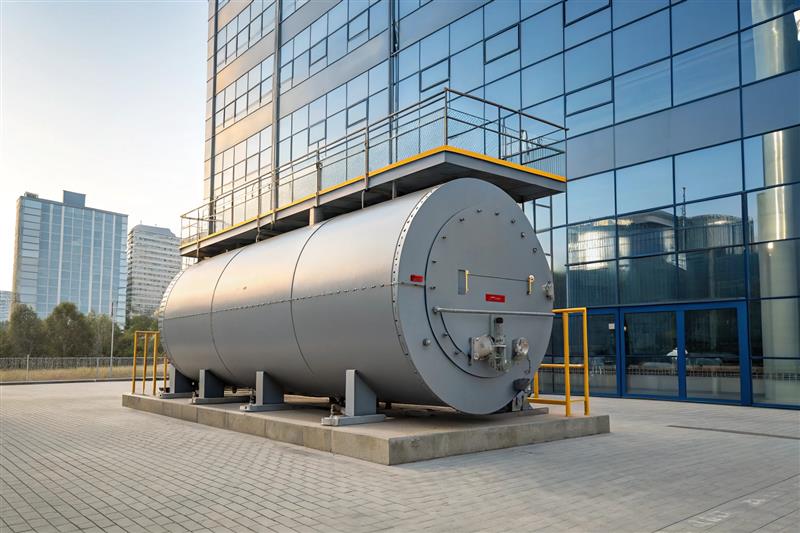
India's leading thermic fluid heater manufacturers include Par Boiler Pvt. Ltd., Thermax, Forbes Marshall, Balkrishna Boilers, and IBL. These companies design and supply coil-type and multi-pass thermic fluid heaters also known as thermal oil heaters or hot oil heaters for textile, chemical, pharmaceutical, food processing, edible oil, rubber, plastic, and paper industries. Thermic fluid heaters deliver high-temperature process heat (150°C–350°C) at near-atmospheric pressure using solid fuel, oil, gas, or biomass. When selecting a manufacturer, evaluate heating capacity (kcal/hr), fuel flexibility, thermal efficiency, coil design quality, expansion tank system, and after-sales service availability.
There is a process heating requirement that steam boilers solve imperfectly and that most Indian plant engineers discover by experience rather than by design: high-temperature process heating at low pressure.
A textile mill needs to heat calendar rolls to 280°C. A chemical plant needs to maintain a reactor at 250°C for eight hours without pressure fluctuation. An edible oil refinery needs precise 220°C heating for deodorisation. In each case, a steam boiler creates a problem before it solves the heating requirement: to produce steam at 280°C saturation temperature, the boiler must operate at 64 kg/cm² which means IBR registration, annual statutory inspections, and a pressure vessel that must be managed with considerable care by trained operators.
A thermic fluid heater solves all of this. It delivers 280°C process heat through a closed loop of thermal oil circulating at 0.3–0.5 kg/cm² near atmospheric pressure. No IBR registration above the standard threshold. No steam distribution losses. No condensate management. No water treatment for scaling. And the heat is delivered uniformly, precisely, and continuously to every process connection on the distribution loop simultaneously.
This guide covers how thermic fluid heaters work, which manufacturers in India have the engineering capability to build one correctly, what a correctly specified system costs in 2026, and what to verify before signing a purchase order.
A thermic fluid heater (TFH), also called a thermal oil heater, hot oil heater, or thermic oil heater, is an indirect heating system that uses a synthetic or mineral thermal oil (heat transfer fluid) as the energy carrier. Fuel burns in the heater's firebox, heats the thermal oil circulating through a coil or tube system, and the heated oil is pumped through a closed distribution loop to process heat exchangers across the plant. Operating temperatures reach 150°C–350°C at a system pressure of just 0.3–0.5 kg/cm² delivering high-temperature process heat without the pressure vessel compliance burden of an equivalent steam boiler system.
The thermic fluid heater system is a closed-loop indirect heating circuit. Understanding each component's role explains why the system performs the way it does and why specification errors in any component compromise the entire installation.
Step 1 — Fuel combustion in the firebox: Fuel (solid, oil, gas, or biomass) burns in the firebox or combustion chamber. In a coil-type TFH, the combustion gases pass over a spiral coil carrying the thermal oil through the firebox. In a three-pass or multi-pass design, gases make multiple passes through the tube bank, extracting heat at each pass before exiting the chimney. The higher the number of passes, the higher the flue gas heat extraction and overall thermal efficiency.
Step 2 — Thermal oil heating: Thermal oil circulates through the coil or tube system, absorbing heat from the combustion gases. The oil temperature rises from the return temperature (typically 200–240°C for a system running at 280°C supply) to the supply temperature as it passes through the heater. The temperature difference (ΔT) across the heater is typically 20–40°C for well-designed systems excessive ΔT indicates undersized heating surface or overfiring.
Step 3 — Oil circulation and heat distribution: A circulation pump (hot oil pump) maintains continuous oil flow through the heater and distribution loop at the required flow rate. The heated oil flows to each process heat exchanger on the distribution ring through a network of insulated pipework, supplying heat to each connected process simultaneously. The oil returns from the process connections at lower temperature and re-enters the heater for re-heating.
Step 4 — Expansion tank system: As thermal oil heats from ambient to operating temperature, its volume increases by 10–15%. A properly designed nitrogen-blanketed expansion tank (or vented tank with a deaerator loop for lower-temperature systems) accommodates this volume change without pressurising the main distribution circuit. The expansion system design is one of the most commonly neglected aspects of TFH installation an incorrectly sized expansion tank creates either oil spillage on thermal expansion or air ingress on cooling, both of which degrade the oil quality rapidly.
Step 5 — Temperature control and safety: A thermocouple in the heater outlet oil stream feeds continuous temperature data to the PLC controller, which modulates the burner firing rate to maintain the oil supply temperature at setpoint within ±2–5°C. Safety systems include high oil temperature cutoff, low oil flow protection, flue gas high-temperature alarm, oil level low alarm in the expansion tank, and flame failure detection with automatic safe shutdown.
The thermic fluid heater's combination of high-temperature capability and low operating pressure is what makes it the preferred process heating solution across a specific and important group of Indian industries. Steam cannot deliver heat above approximately 200°C without operating at very high pressures (15+ kg/cm²) that require IBR-certified boilers, trained operators, and annual statutory inspections. A TFH delivers the same temperature at 0.3 kg/cm² — making high-temperature heating accessible to plants that cannot justify the infrastructure and compliance burden of high-pressure steam.
The economic case is equally strong. A thermic fluid system has no condensate loss, no water treatment cost for scale prevention, no steam traps that fail and waste energy continuously, and no distribution losses from insulation gaps in steam lines. These combined losses typically reduce effective efficiency of steam-based heating systems by 15–25% compared to their rated boiler efficiency. A thermic fluid heater operating at 85% thermal efficiency delivers more net heat to process per unit of fuel than a steam boiler of equivalent thermal rating operating in a real plant steam distribution system.
| TFH Type | Fuel | Temp Range | Efficiency | Capacity Range | Best For |
|---|---|---|---|---|---|
| Coil Type (Gas/Oil) | Gas, oil, diesel | 150°C – 300°C | 82 – 88% | 1 – 20 lakh kcal/hr | Pharma, food, small textile |
| Three-Pass (Gas/Oil) | Gas, oil, diesel | 150°C – 320°C | 86 – 92% | 5 – 50 lakh kcal/hr | Large textile, chemical, rubber |
| Solid Fuel / Biomass | Coal, husk, wood, biomass | 150°C – 320°C | 78 – 85% | 3 – 60 lakh kcal/hr | Textile, plywood, paper, edible oil |
| Electric TFH | Electricity | 100°C – 300°C | 95 – 99% | 0.5 – 10 lakh kcal/hr | Lab, pharma, small processes |
| Multi Fuel | Gas + diesel or coal + biomass | 150°C – 320°C | 80 – 90% | 5 – 50 lakh kcal/hr | Plants needing fuel flexibility |
| Vertical Design | Gas, oil, solid fuel | 150°C – 320°C | 80 – 88% | 1 – 20 lakh kcal/hr | Space-constrained installations |
The five manufacturers below were evaluated on thirteen practical criteria that reflect what actually determines a thermic fluid heater system's long-term performance and total cost of ownership not sales brochure claims. The most heavily weighted criteria were coil design quality and materials, expansion system engineering, thermal oil specification knowledge, and after-sales service capability. These four criteria have the largest impact on the two outcomes that matter most: long-term thermal efficiency and thermal oil service life.
Par Boiler Pvt. Ltd. is one of the most established thermic fluid heater manufacturers in India, designing and supplying coil-type and multi-pass thermic fluid heaters from its Ahmedabad manufacturing facility for over 25 years. The company's TFH range covers gas-fired, oil-fired, solid fuel-fired, and biomass-fired configurations from 2 lakh kcal/hr to 60 lakh kcal/hr, with PLC-based automation, high-efficiency burners, and complete expansion and deaeration systems supplied as an integrated package.
Par Boiler's thermic fluid heater engineering reflects the company's background in steam boiler and process heating the same attention to coil design, heat transfer surface calculation, and fluid velocity that determines steam boiler performance applies equally to TFH coil and tube design. Their in-house engineering team calculates the oil-side film temperature and bulk temperature for each coil design to ensure thermal oil is not thermally degraded at the coil surface a detail that directly determines whether the thermal oil lasts its designed 5–7 year service life or degrades within two years.
The company's service network covers Gujarat, Maharashtra, Rajasthan, and Madhya Pradesh with local service engineers available for commissioning, annual servicing, and thermal oil quality testing. Every TFH system is supplied with thermal oil specification documentation, startup commissioning support, and operator training.
Best for: Textile, chemical, pharmaceutical, food processing, edible oil, and rubber industries across Gujarat and pan-India requiring solid fuel, gas, oil, or biomass-fired TFH systems with single-source engineering and service support.
Capacity range: 2 lakh kcal/hr to 60 lakh kcal/hr
Fuels: Gas, oil, diesel, solid fuel, biomass
Need a thermic fluid heater sized for your specific process temperature and capacity? Par Techno-Heat's engineering team reviews your heat load, temperature requirement, fuel type, and distribution loop design before recommending a system. Contact Par Techno-Heat Pvt. Ltd. for a free technical consultation.
Thermax manufactures thermic fluid heaters as part of a comprehensive industrial heating and energy management portfolio. Their TFH range covers large-capacity multi-pass designs for chemical, textile, and paper industries with strong technical depth in thermal oil system engineering and long-term service support across major Indian industrial centres.
Best for: Large-scale chemical, textile, and paper industries requiring high-capacity TFH systems with national service support.
Forbes Marshall brings deep steam and thermal engineering expertise to the thermic fluid heater market, with particular strength in the design of complete thermal heating systems integrating TFH with process equipment and instrumentation. Their systems are specified by EPC contractors for large chemical, pharmaceutical, and specialty industrial projects.
Best for: EPC-contracted projects, pharmaceutical, chemical specialty plants requiring comprehensive thermal system engineering.
Balkrishna Boilers specialises in steam boilers and thermic fluid heaters for small and medium industrial applications across India, with a strong presence in the textile, food processing, and engineering industry sectors. Their TFH designs cover coil-type and three-pass configurations in gas, oil, and solid fuel options.
Best for: Small to medium textile, food processing, and engineering industries requiring reliable TFH systems at competitive price points.
IBL's thermic fluid heater range covers a broad capacity spread for diverse industrial applications, with a product portfolio that also includes steam boilers and hot water generators, making them a practical single-source supplier for plants requiring multiple heating system types.
Best for: Plants seeking single-source supply of TFH alongside steam boilers and hot water generators for different process heating requirements.
| Company | Experience | Key Products | Fuels | Industries | Core Strength |
|---|---|---|---|---|---|
| Par Boiler Pvt. Ltd. | 25+ years | Coil, multi-pass TFH | Gas, oil, coal, biomass | Textile, chemical, pharma, food, edible oil | Custom engineering, fuel flexibility, integrated service |
| Thermax | 50+ years | Multi-pass, large-capacity TFH | Gas, oil, biomass | Chemical, textile, paper | Large-scale thermal system engineering |
| Forbes Marshall | 75+ years | Integrated TFH systems | Gas, oil | Pharma, chemical, specialty | Complete thermal system EPC |
| Balkrishna Boilers | 30+ years | Coil, three-pass TFH | Gas, oil, solid fuel | Textile, food, engineering | Cost-effective SME solutions |
| IBL | 40+ years | TFH + steam boiler + HWB | Gas, oil, coal | Broad industrial | Single-source multi-system supply |
| Industry | Typical TFH Application | Operating Temperature | Recommended TFH Type |
|---|---|---|---|
| Textile | Calendar heating, stenter heating, process vessel jacketing | 220°C – 280°C | Three-pass solid fuel or gas |
| Chemical | Reactor heating, distillation column, heat exchanger | 200°C – 320°C | Three-pass gas or oil |
| Pharmaceutical | Reactor jacketing, dryer heating, vessel heating | 150°C – 250°C | Coil type gas, precise control |
| Edible Oil & Vanaspati | Deodorisation, bleaching, hydrogenation heating | 200°C – 260°C | Three-pass gas or solid fuel |
| Rubber Industry | Vulcanisation press heating, mould heating | 150°C – 200°C | Coil type gas or oil |
| Plywood & Wood Processing | Hot press platens, drying, veneer pressing | 150°C – 200°C | Biomass or solid fuel TFH |
| Paper Industry | Calendar roll heating, drying cylinder | 180°C – 250°C | Three-pass gas or biomass |
| Plastic & Polymer | Extruder barrel heating, mould temperature control | 150°C – 280°C | Coil type gas or electric |
| Food Processing | Frying, cooking, baking pan heating | 150°C – 220°C | Gas fired coil type (food grade oil) |
| Paint & Coatings | Resin reactor heating, batch vessel jacketing | 180°C – 280°C | Three-pass gas or oil |
| Parameter | Thermic Fluid Heater | Steam Boiler |
|---|---|---|
| Heat Transfer Medium | Synthetic / mineral thermal oil | Water / steam |
| Operating Pressure | 0.3 – 0.5 kg/cm² (near atmospheric) | 7 – 65+ kg/cm² |
| Max Temperature | Up to 350°C at low pressure | 300°C+ requires very high pressure |
| IBR Compliance | Not required (below IBR threshold) | Required above threshold |
| Condensate Loss | None closed loop system | Significant in open steam distribution |
| Water Treatment Required | No thermal oil system | Yes essential for scale prevention |
| Steam Traps | None required | Required failure is common energy loss |
| Thermal Efficiency | 82 – 92% (no distribution losses) | 80 – 90% (minus distribution losses) |
| Best For | High-temp process heating (150°C–350°C) | Steam-based processes, power generation |
The practical decision rule: choose a thermic fluid heater when your process requires sustained high temperature above 160°C at multiple points in the plant simultaneously, and where steam's condensation properties would require complex steam trap management or where the IBR compliance of a high-pressure steam boiler adds operational complexity you want to avoid. Choose a steam boiler when the process requires steam specifically sterilisation, autoclave, turbine drive, or direct steam injection into a process. For a comprehensive understanding of steam boiler systems and their applications, see our guide on steam boiler systems in India.
| Fuel | Approx. Cost (2026) | TFH Efficiency | Emissions | Best Application | Key Limitation |
|---|---|---|---|---|---|
| Natural Gas (PNG) | ₹40–55/m³ | 86 – 92% | Very Low | Pharma, food, textile, urban plants | Pipeline connection needed |
| LPG | ₹90–110/kg | 84 – 90% | Low | Pharma, food where gas unavailable | Higher running cost than PNG |
| Diesel / LDO | ₹80–95/litre | 82 – 88% | Medium | Remote locations, backup fuel | Highest running cost |
| Coal | ₹10–16/kg | 78 – 84% | High | Textile, plywood, paper, cement | Ash handling, emission controls needed |
| Biomass (rice husk, wood chips) | ₹1.5–6/kg | 78 – 84% | Low-Medium | Agro-processing, textile, wood processing | Economics depend on proximity to source |
| Electricity | ₹5–9/kWh | 95 – 99% | Zero on-site | Lab, pharma, small processes | High running cost at large capacity |
| Capacity | Fuel Type | Design | Approx. Price Range (₹) |
|---|---|---|---|
| Up to 5 lakh kcal/hr | Gas / Oil | Coil type | ₹3 lakh – ₹10 lakh |
| 5 – 15 lakh kcal/hr | Gas / Oil / Biomass | Coil / Three-pass | ₹10 lakh – ₹28 lakh |
| 15 – 30 lakh kcal/hr | Gas / Solid fuel / Biomass | Three-pass | ₹28 lakh – ₹60 lakh |
| 30 – 60 lakh kcal/hr | Solid fuel / Biomass / Gas | Multi-pass / large TFH | ₹60 lakh – ₹1.4 crore |
| Above 60 lakh kcal/hr | Multi-fuel | Large industrial TFH | ₹1.4 crore and above |
Prices are indicative 2026 estimates. Actual cost depends on capacity, fuel type, design configuration, automation level, expansion system design, and accessories. Contact Par Techno-Heat for a site-specific quotation.
| Criteria | What to Verify |
|---|---|
| Heating capacity (kcal/hr) | Sum of all process heat exchanger duties at peak simultaneous operation |
| Max oil supply temperature | Must be 20–30°C above the highest process temperature requirement |
| Coil design and material | Ask for the oil-side film temperature calculation must stay 20–30°C below oil thermal degradation temperature |
| Thermal oil specification | Manufacturer should specify the correct grade (Therminol, Dowtherm, Shell Thermia, etc.) and explain the selection rationale |
| Expansion tank design | Correctly sized for thermal expansion; nitrogen-blanketed for high-temperature applications to prevent oil oxidation |
| Circulation pump specification | Correct flow rate and head for the distribution loop; hot oil pump with mechanical seal rated for operating temperature |
| Safety systems | High oil temperature cutoff, low flow protection, expansion tank low level alarm all mandatory |
| Reference installations | Ask for references in your specific industry and fuel type not generic references |
| Thermal oil service support | Can the manufacturer conduct thermal oil quality testing and recommend oil change schedule? |
| AMC availability | Annual maintenance contract covering burner service, pump inspection, expansion system check, and oil quality assessment |
Evaluating thermic fluid heater suppliers for your plant? Par Boiler's engineering team reviews your heat load, temperature requirement, fuel, and distribution loop layout before recommending a system configuration. Contact Par Techno-Heat Pvt. Ltd. for a free technical consultation.
| Frequency | Maintenance Task | Why It Matters |
|---|---|---|
| Daily | Check supply and return oil temperatures against setpoint | Rising ΔT (temperature difference) signals fouled coil or reduced oil flow |
| Daily | Check circulation pump pressure and flow rate | Reduced flow reduces heat transfer rate and increases coil film temperature oil degrades faster |
| Daily | Check expansion tank oil level | Falling level signals oil leakage in the distribution system |
| Daily | Check fuel supply to burner and flame condition | Uneven flame signals burner fouling fuel efficiency drops |
| Weekly | Inspect burner nozzle, electrodes, and flame detector | Fouled burner nozzle reduces combustion efficiency and increases unburned fuel losses |
| Weekly | Check safety valve on expansion tank for correct condition | Safety valve protects against overpressure in the expansion system |
| Monthly | Take thermal oil sample for quality analysis | Oil viscosity, flash point, and acid number indicate degradation level before it causes coil damage |
| Monthly | Check pump mechanical seal for leakage | Hot oil leakage from pump seal is a fire risk and indicates seal replacement is overdue |
| Annual | Full burner overhaul and combustion analysis | Restore combustion efficiency and verify flue gas O₂ and CO levels are within design |
| Annual | Thermal oil change based on quality test results | Degraded oil deposits carbon on coil surfaces, reducing heat transfer and causing local overheating |
| Annual | Coil inspection (external) and cleaning of firebox | Carbon and ash deposits on coil exterior reduce heat transfer remove with wire brush and air blow-down |
| Annual | Check and replace pump bearings on schedule | Hot oil pump bearing failure causes system shutdown and potential hot oil leakage emergency |
| Advantage | What It Means for Your Plant |
|---|---|
| 30–50% lower cost than imports | Same thermal performance at significantly lower purchase price |
| Fuel flexibility | Indian manufacturers design readily for coal, biomass, and multi-fuel configurations international brands typically offer only gas or oil |
| Faster delivery | 8–16 weeks from order to delivery versus 4–6 months for imported systems |
| Local service engineers | On-site service response within 24–48 hours; international suppliers cannot match this |
| Customisation | Indian manufacturers adapt coil design, firebox dimensions, and distribution system to site-specific requirements readily |
| Spare parts locally stocked | Burner components, pump seals, control instruments available without import lead time |
A thermic fluid heater (TFH), also called a thermal oil heater or hot oil heater, is an indirect industrial heating system using synthetic or mineral thermal oil as the heat transfer medium. The oil is heated by a burner in a coil or multi-pass tube system, circulated through process heat exchangers by a pump, and returned for reheating. It delivers 150°C–350°C process heat at 0.3–0.5 kg/cm² high temperature without the high-pressure steam boiler compliance burden.
Par Boiler Pvt. Ltd., Thermax, Forbes Marshall, Balkrishna Boilers, and IBL are among the most trusted thermic fluid heater manufacturers in India. The best choice depends on your heating capacity, fuel type, required oil temperature, industry sector, and whether you need the TFH integrated with other plant heating systems.
Fuel burns in the firebox, generating combustion gases that heat thermal oil circulating through coils or tubes. The heated oil is pumped through an insulated closed-loop distribution system to process heat exchangers across the plant, supplying heat simultaneously to multiple process connections. Return oil at lower temperature re-enters the heater for reheating. A PLC controller maintains the oil supply temperature at the setpoint within ±2–5°C.
A thermic fluid heater uses thermal oil as the heat transfer medium and operates at near-atmospheric pressure (0.3–0.5 kg/cm²), delivering 150°C–350°C without IBR registration requirements. A steam boiler uses water as the heat transfer medium and operates at 7–65+ kg/cm² pressure to deliver equivalent temperatures. TFH has no condensate loss, no water treatment cost, and no steam traps. Steam boilers are needed when the process specifically requires steam sterilisation, autoclave, turbine drive.
Natural gas (PNG) offers the best combination of thermal efficiency (86–92%), clean combustion, and precise temperature control preferred for pharmaceutical, food, and urban plants. Biomass (rice husk, wood chips) gives the lowest fuel cost for large-capacity TFH systems near agro-waste sources. Coal suits heavy industrial applications where fuel cost is the primary driver. Diesel/LDO is used as backup or where other fuels are unavailable.
Textile (calendar and stenter heating), chemical (reactor and vessel heating), pharmaceutical (reactor jacketing), edible oil (deodorisation, bleaching), rubber (vulcanisation press), plywood and wood processing (hot press platens), paper (calendar roll heating), food processing, paint (resin reactor), and plastic (extruder barrel heating) are the primary users of thermic fluid heaters in India.
Thermal oil (also called heat transfer fluid or thermic fluid) is a specially formulated mineral or synthetic oil with high thermal stability at elevated temperatures, low vapour pressure to maintain liquid phase at operating conditions, and good heat transfer properties. Common brands used in Indian industry include Therminol, Dowtherm, Shell Thermia, and Mobiltherm. Selection depends on the maximum operating temperature, required service life, and compatibility with system materials the manufacturer should specify the correct grade.
Most standard thermic fluid heaters supply thermal oil at 150°C–320°C. High-temperature designs using synthetic thermic fluids (Therminol VP-1, Dowtherm A) achieve 350°C–400°C. The practical limit depends on the thermal oil grade specified operating the oil above its maximum film temperature causes rapid thermal degradation, coil fouling, and early system failure.
Thermic fluid heater prices in India range from ₹3 lakh for small coil-type gas-fired units (up to 5 lakh kcal/hr) to ₹1.4 crore and above for large multi-fuel industrial TFH systems above 60 lakh kcal/hr. A medium-capacity 15 lakh kcal/hr three-pass gas-fired TFH typically costs ₹18–₹35 lakh depending on design and automation level.
Thermal oil service life is typically 5–7 years under correct operating conditions. However, oil condition must be monitored by annual quality testing (flash point, viscosity, acid number). Oil should be replaced earlier if testing shows: flash point below 150°C (indicating light-end contamination), acid number above 0.5 mg KOH/g (indicating oxidation), or high carbon residue levels. Operating above the oil's maximum temperature dramatically accelerates degradation.
ISO 9001 quality management certification is the baseline. For solid fuel or biomass-fired TFH systems, CPCB compliance documentation for associated pollution control equipment is required. CE marking is relevant for export-destined installations. IBR registration is typically not required for TFH systems operating below the IBR pressure threshold (1 kg/cm²), which covers most standard thermic fluid systems.
A well-maintained thermic fluid heater coil and system structure typically lasts 15–20 years. The coil is the highest-stress component correct oil flow velocity (preventing stagnant zones where coking occurs) and annual oil quality testing are the two practices that most directly determine coil life. Burner components, pump mechanical seals, and instrumentation are wear items replaced on schedule.
Daily: temperature differential and pump pressure check. Weekly: burner flame inspection and expansion tank level. Monthly: thermal oil sample for quality analysis and pump seal leakage check. Annual: full burner overhaul, coil external inspection and firebox cleaning, pump bearing replacement, oil change based on quality test, safety system testing. The monthly oil quality check is the single most important preventive maintenance task for long TFH service life.
Gas-fired or oil-fired indirect thermic fluid heaters using food-grade thermal oil (H1 rated for incidental food contact) are suitable for food processing applications. Food-grade thermal oils meeting NSF H1 or equivalent food safety standards must be specified where oil leakage could contact the food product. Gas-fired coil-type TFH with PLC temperature control ±2°C is the standard specification for bakery, confectionery, and frying applications.
Modern thermic fluid heaters achieve 82–92% overall thermal efficiency depending on design (coil type vs multi-pass) and fuel type. More importantly, a TFH delivers net heat to process more efficiently than steam-based systems because it has no condensate losses, no steam trap failures, and no distribution losses from insulation gaps issues that typically reduce a steam boiler's effective plant heat delivery by 15–25% below its rated boiler efficiency.
In a thermic fluid heater system, the primary heating is always indirect: the combustion gases heat the thermal oil through the coil or tube wall (direct heating of the oil by combustion would cause immediate thermal degradation). The term "indirect heating" in the context of process connections means the thermal oil heats the process through a heat exchanger, never contacting the product directly which is why TFH is suitable for pharmaceutical, chemical, and food applications.
Mandatory safety features include: high oil temperature cutoff (shuts burner before oil reaches degradation temperature), low oil flow protection (shuts burner if pump fails or flow drops below minimum safe velocity), expansion tank low level alarm (indicates oil leakage), high flue gas temperature alarm (indicates fouled coil), and flame failure detection with automatic burner shutdown and lockout. PLC-based BMS integrating all these interlocks is the standard on any properly specified TFH system.
A three-pass multi-pass thermic fluid heater with forced circulation pump, PLC automation, demand-based modulating burner, and a correctly sized nitrogen-blanketed expansion tank is the best design for continuous 24-hour industrial operation. The multi-pass design gives higher thermal efficiency than coil-type units, and the modulating burner maintains precise temperature control under varying process load without cycling on/off.
Yes. Biomass-fired thermic fluid heaters using rice husk, wood chips, groundnut shells, or bagasse are widely used in Indian textile, edible oil, plywood, and agro-processing industries where biomass fuel is available at low cost near the plant. Biomass TFH systems use an indirect firebox design where the biomass burns on a grate and combustion gases heat the oil coil the oil never contacts biomass combustion products directly.
Ask these five questions: (1) Can they provide the oil-side film temperature calculation for their coil design? (2) Do they specify the correct thermal oil grade for your operating temperature? (3) Do they design the expansion system for nitrogen blanketing at temperatures above 200°C? (4) Do they have reference installations in your specific industry and with your fuel type? (5) What is their local service engineer response time and do they offer thermal oil quality testing as part of AMC?
Par Techno-Heat Pvt. Ltd. designs and manufactures coil-type and multi-pass thermic fluid heaters gas, oil, coal, biomass, and multi-fuel configurations for textile, chemical, pharmaceutical, edible oil, rubber, and food processing industries across India.
A 20-minute technical discussion covers your heat load, process temperature, fuel type, and distribution loop design before any system is proposed.
