

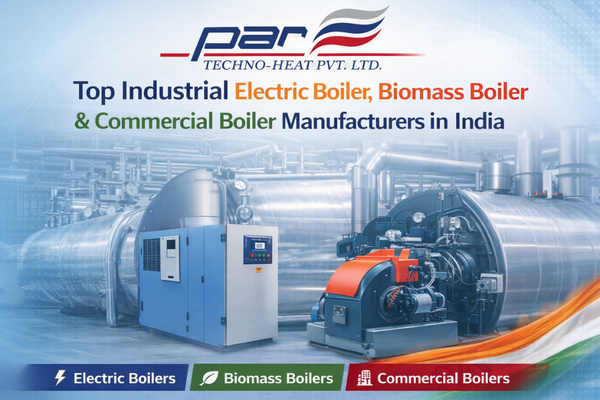
Industrial growth across India has significantly increased the demand for reliable steam and heat generation systems. Boilers are a critical part of industrial operations, supporting processes such as heating, sterilization, drying, and power generation. As industries expand and production volumes grow, the need for efficient and high-performance boiler systems continues to rise.
In recent years, many industries have started shifting toward electric boilers and biomass boilers two technologies that offer significant advantages over conventional coal-fired systems. Electric boilers are gaining popularity due to their zero-emission operation, compact design, and minimal maintenance requirements. Biomass boilers, on the other hand, provide a sustainable and cost-effective solution by utilizing renewable fuels such as agricultural waste, rice husk, bagasse, and biomass pellets.
Choosing the right manufacturer plays a crucial role in ensuring long-term performance and reliability. Today, Ahmedabad has emerged as a major manufacturing hub for industrial boiler production home to many leading electric boiler manufacturers in India and biomass boiler manufacturers in India offering advanced solutions for industries across the country.
An industrial boiler is a closed pressure vessel designed to generate steam or hot water by heating water using fuel or electricity. The generated steam is distributed through pipelines and used in various industrial processes from heating and sterilization to drying and power generation.
The working principle is straightforward: water inside a pressurized chamber is heated until it converts into steam at the required pressure. This steam drives production processes, machinery, or utilities depending on the industry.
Industrial boilers play several critical roles, including providing continuous steam for manufacturing processes, supporting heating and drying operations, ensuring consistent temperature control in production lines, and improving overall energy efficiency within plants.
Industries that rely most heavily on boiler systems include textile manufacturing, chemical and petrochemical industries, food and beverage processing, pharmaceutical manufacturing, and power generation facilities. For a broader understanding of how industrial boilers function and what types are available, our detailed guide on what is an industrial boiler types, working, and applications covers everything you need to know before making a purchase decision.
Different industries require different types of boilers depending on their operational needs, fuel availability, and environmental compliance requirements. The most commonly used boilers in Indian industries today include electric boilers, biomass boilers, and commercial boilers.
An electric boiler uses electrical resistance elements, immersion heaters, or electrode technology to heat water and generate steam entirely without combustion. There is no burner, no flue gas, and no fuel storage required. The boiler is connected to an electrical power supply and generates steam on demand at precisely controlled temperatures and pressures.
This makes electric boilers fundamentally different from all fossil-fuel-fired systems they are the only boiler type that produces absolutely zero on-site emissions during operation.
Inside an electric boiler, electrical energy is converted directly into heat through resistance heating elements or electrode heating systems immersed in the water. As water absorbs the electrical energy, it heats up rapidly and converts into steam at the set pressure. A PLC-based control panel regulates the heating elements, maintains pressure within the set range, and triggers automatic shutdown if parameters are exceeded.
Because there is no combustion involved, there are no exhaust gases, no chimney requirements, and no ash or residue to handle. The entire heat generation process is clean, silent, and fully controllable.
Resistance Heating Electric Boilers use electrical resistance elements similar to water heater elements, submerged in water. These are the most common type for small to medium steam requirements.
Electrode Electric Boilers pass electrical current directly through the water, using water itself as the resistance medium. These are suitable for higher capacities and very rapid steam generation.
Immersion Element Electric Boilers use removable immersion-type heating elements that are easy to replace during maintenance, making them suitable for continuous production environments.
Electric boilers offer a compelling combination of operational and environmental advantages that make them particularly well-suited for specific industry sectors:
Zero Emissions: No combustion means no NOx, SOx, or particulate matter making electric boilers fully compliant with CPCB emission norms without any add-on pollution control equipment.
Compact Design: Electric boilers require significantly less installation space compared to coal, gas, or biomass systems. There is no fuel storage yard, no ash pit, and no chimney ideal for facilities with limited footprint.
Precise Temperature Control: Electric heating can be regulated with extreme precision, making these boilers ideal for processes that require stable, accurate steam conditions such as pharmaceutical manufacturing and food sterilization.
Low Maintenance: Without a burner, combustion chamber, or fuel handling system, electric boilers have far fewer wear components. Annual maintenance costs are significantly lower compared to any combustion-based system.
Fast Installation and Commissioning: Electric boilers can be installed quickly with minimal civil work no chimney construction, no fuel pipelines, no ash handling infrastructure. Commissioning time is typically measured in days, not weeks.
IBR Compliance: Electric boilers above the regulated threshold are IBR registered, and Par Boiler supplies fully certified systems with all documentation.
Pharmaceutical Industry: Clean steam free from combustion byproducts is essential for sterilization, autoclave operations, and injectable manufacturing. Electric boilers are the preferred choice.
Food & Beverage Processing: Hygiene-critical processes such as pasteurization, sterilization, and packaging require contamination-free steam which only electric and gas boilers can guarantee.
Laboratories and R&D Facilities: Precise, on-demand steam at controlled pressure and temperature makes electric boilers ideal for laboratory-scale operations.
Textile Industry (finishing sections): Where clean, dry steam is required for high-quality fabric finishing, electric boilers deliver consistent results.
Dairy Industry: CIP (Clean-in-Place) cleaning systems, pasteurization lines, and packaging operations in dairy plants benefit from the clean, controllable steam that electric boilers provide.
As Indian industries face tightening environmental regulations from the CPCB and State PCBs, demand for electric boiler manufacturers in India is expected to grow significantly through 2026 and beyond. Par Boiler offers a complete range of industrial electric boilers designed for Indian operating conditions, with full IBR certification and PLC-based automation.
A biomass boiler is an industrial boiler that burns organic materials agricultural residues, wood chips, bagasse, rice husk, groundnut shells, mustard stalks, biomass pellets, or other agro-waste as fuel to generate steam and heat. Rather than relying on fossil fuels like coal, gas, or diesel, biomass boilers utilize renewable organic matter that would otherwise be waste material.
This makes biomass boilers both an economically attractive and environmentally responsible choice for industries located in agricultural regions of India particularly in Gujarat, Maharashtra, Punjab, Haryana, and Andhra Pradesh where agro-waste is abundantly available at very low cost.
A biomass boiler operates on the same fundamental heat-exchange principle as other steam boilers, but the combustion system is specially designed to handle solid biomass fuels with varying moisture content, calorific value, and ash characteristics.
Biomass fuel is fed into the combustion chamber through a mechanical stoker, screw conveyor, or spreader-stoker system. Inside the furnace, the biomass burns on a grate or in a fluidized bed generating high-temperature flue gases. These hot gases pass through the heat exchange surface, transferring energy to the water in the boiler shell or tubes. The water heats up and converts into steam at the required pressure.
The most advanced biomass boiler technology used today is Fluidized Bed Combustion (FBC) where biomass fuel is burned in a turbulent bed of hot sand particles. FBC boilers achieve higher combustion efficiency, can handle multiple fuel types simultaneously, and produce lower NOx and SOx emissions compared to conventional grate-fired biomass boilers.
Par Boiler specializes in FBC-based biomass boilers that can burn rice husk, bagasse, wood chips, agro-waste, and coal either individually or in combination providing maximum fuel flexibility.
| Biomass Fuel | Calorific Value | Common Source Industries |
|---|---|---|
| Rice Husk | 3,000 – 3,500 kcal/kg | Rice mills, food processing |
| Bagasse | 2,200 – 2,500 kcal/kg | Sugar mills, distilleries |
| Wood Chips / Pellets | 3,800 – 4,500 kcal/kg | Paper, plywood, furniture |
| Groundnut Shells | 3,500 – 4,000 kcal/kg | Oil mills, food processing |
| Mustard / Cotton Stalk | 3,200 – 3,600 kcal/kg | Textile, agro-processing |
| Coal + Biomass Mix | Variable | Heavy industries, co-firing |
Extremely Low Fuel Cost: Biomass fuel particularly rice husk, bagasse, and agro-waste is available at ₹2–₹6 per kg in most agricultural regions of India, compared to ₹10–₹18 per kg for coal and ₹90–₹110 per kg for LPG. For industries running boilers 20 hours per day, the monthly fuel savings can reach ₹8–₹15 lakh compared to coal.
Carbon Neutral Operation: When biomass is burned, it releases only the CO₂ that the plant absorbed during its growth making the net carbon emission cycle essentially neutral. This supports industries' sustainability reporting and ESG compliance goals.
Utilization of Waste Material: Many industries generate large volumes of agricultural or organic waste that would otherwise require disposal. Using this waste as boiler fuel eliminates a disposal problem while simultaneously reducing energy costs.
Multi-Fuel Flexibility: Modern biomass boilers especially FBC designs can switch between different fuel types based on seasonal availability and price, giving industries operational and procurement flexibility.
Government Incentives: The Ministry of New and Renewable Energy (MNRE) offers subsidies and incentives for biomass-based energy systems in India, reducing the capital cost of installation.
Compliance with Renewable Energy Targets: Industries with renewable energy obligations or carbon reduction commitments can count biomass boiler output toward their targets.
Sugar Industry: Bagasse the fibrous residue from sugarcane crushing is available in enormous quantities at near-zero cost. Sugar mills use bagasse-fired biomass boilers extensively for process steam and co-generation.
Rice Mills: Rice husk is the single most common biomass boiler fuel in India. Rice mills across Gujarat, Punjab, and West Bengal use husk-fired boilers to meet their entire steam and electricity requirements.
Textile Industry: Textile processing units in Surat, Ahmedabad, and Tirupur use biomass boilers to reduce fuel bills while meeting steam demands for dyeing and finishing.
Paper & Pulp Industry: High steam demand makes biomass boilers highly economical for paper mills where wood waste and black liquor are available on-site.
Distilleries and Breweries: Spent grain and organic residues from the fermentation process can be used as supplementary biomass fuel.
For industries evaluating biomass boilers as an alternative to coal or gas systems, understanding the differences in capital cost, running cost, and maintenance requirements is essential. Our comprehensive guide on boiler efficiency how to improve performance explains how biomass boiler efficiency can be maximized through operational practices and system design.
Ahmedabad has become one of the most important cities in India for engineering and boiler manufacturing for several well-established reasons.
The city has a strong industrial infrastructure with fabrication units, engineering workshops, industrial material suppliers, and precision machining facilities all concentrated within a compact industrial geography. This supply chain depth allows boiler manufacturers to source quality materials quickly and produce equipment at competitive cost.
A skilled engineering workforce with deep expertise in mechanical design, pressure vessel fabrication, welding certification, and IBR compliance is readily available in Ahmedabad. The city's engineering colleges and ITIs supply a continuous pipeline of trained talent to the manufacturing sector.
Ahmedabad's strategic location provides excellent connectivity to major industrial markets across India Gujarat, Maharashtra, Rajasthan, Madhya Pradesh, and beyond through road, rail, and the nearby JNPT and Mundra ports for export.
The result is that businesses searching for top boiler manufacturers in Ahmedabad find a mature, competitive manufacturing ecosystem that offers quality, customization, and price advantages unavailable in smaller industrial centers.
Par Techno-Heat Pvt. Ltd., widely known as PAR Boiler, is one of the leading industrial boiler manufacturers in Ahmedabad with over 25 years of experience. The company specializes in high-performance steam generation systems for textiles, pharmaceuticals, chemicals, food processing, and engineering industries.
PAR Boiler manufactures a comprehensive product range including packaged boilers, electric boilers, biomass and FBC boilers, water tube boilers, thermic fluid heaters, and complete air pollution control systems all fully IBR certified with PLC automation and dedicated after-sales service across India.
Thermax is one of India's largest energy and environmental engineering companies, manufacturing a wide range of industrial boilers including steam boilers, biomass boilers, and waste heat recovery systems.
Forbes Marshall is recognized for steam engineering and energy efficiency expertise, providing industrial boilers and comprehensive steam management systems.
A well-established manufacturer of industrial steam boilers and power boilers for large-scale industrial plants across India.
ISGEC manufactures industrial boilers, pressure vessels, and power plant equipment for heavy industries including power, sugar, and chemical sectors.
Specializes in steam boilers and thermic fluid heaters designed for various small and medium industrial applications.
Focuses on energy-efficient steam systems for small and medium industrial sectors with customized design options.
Manufactures a range of industrial steam boilers for industries across India and international markets.
Produces packaged boilers and customized steam systems for medium-scale industries with a focus on reliability and service.
Supplies industrial steam boilers designed for multiple capacity requirements across diverse industry applications.
Selecting the right manufacturer is one of the most consequential decisions for any industrial facility. A reliable supplier provides not only quality equipment but also long-term technical support, spare parts availability, and maintenance services.
When evaluating industrial boiler manufacturers in India, businesses should assess experience and industry reputation, product quality and IBR safety certifications, custom boiler design capabilities, spare parts availability, after-sales service network strength, and energy efficiency credentials.
A structured approach to this evaluation saves significant time and protects against costly mistakes. Our detailed boiler manufacturer in India selection checklist covers 10 critical evaluation criteria including IBR certification checks, warranty terms, and service response time standards that every industrial buyer should verify before placing an order.
A well-designed industrial boiler offers several important features that determine long-term efficiency and reliability. High thermal efficiency means more steam output per unit of fuel, directly reducing operating expenses. Durable construction using quality materials certified for high-pressure and high-temperature service ensures a long operational life.
Modern boiler systems include advanced safety features such as pressure controls, automatic shutdown systems, and temperature monitoring. Smart automation and digital monitoring allow operators to track performance in real time and optimize energy consumption continuously.
Maintaining these systems properly is equally important. Scheduled inspections and preventive maintenance directly impact boiler efficiency, safety, and lifespan. Our industrial boiler maintenance checklist provides a structured daily, weekly, and annual maintenance schedule designed for industrial operations across India.
The future of industrial boiler technology in India is shaped by three converging forces: automation, energy efficiency, and environmental sustainability.
Smart boiler systems equipped with IoT-based remote monitoring, predictive maintenance algorithms, and AI-driven fuel optimization are becoming increasingly accessible. These systems allow operators to monitor performance in real time, detect early warning signs of problems, and reduce unplanned shutdowns.
Biomass boilers and electric boilers are expected to see the strongest growth through 2026 and beyond, driven by rising fossil fuel costs, tightening CPCB emission norms, and India's national commitments to renewable energy. FBC technology will continue to evolve toward higher efficiency and multi-fuel capability.
For industries evaluating their options today, choosing a manufacturer that offers both electric and biomass solutions alongside conventional gas and coal systems provides the flexibility to adapt as energy economics and regulations continue to evolve.
Q1. What is the difference between electric boilers and biomass boilers?
Electric boilers use electrical energy to generate heat and steam with zero on-site emissions. Biomass boilers use organic materials such as rice husk, wood chips, or bagasse as fuel a renewable, low-cost option ideal for industries near agricultural regions.
Q2. Which industries use industrial boilers the most in Gujarat?
Textile, pharmaceutical, food processing, chemical, dairy, and sugar industries are the largest users of industrial boilers in Gujarat, with high concentrations in Ahmedabad, Surat, Vadodara, and Rajkot.
Q3. Why are biomass boilers considered eco-friendly?
Biomass boilers use renewable organic fuels whose carbon cycle is essentially neutral the CO₂ released during combustion was absorbed during the plant's growth. Combined with lower NOx and SOx emissions, they meet CPCB norms more easily than coal-fired systems.
Q4. Are electric boilers suitable for large industrial operations?
Yes. Modern industrial electric boilers are designed for capacities from 50 kg/hr to several thousand kg/hr. They are particularly suited for pharmaceutical, food, and laboratory applications where clean steam is mandatory.
Q5. How do I choose the right boiler manufacturer in Ahmedabad?
Evaluate experience, IBR certification, product range, customization capability, after-sales service quality, and client references. A manufacturer offering both electric and biomass solutions provides the most flexibility for future requirements.
Q6. What is the price range of industrial boilers in Ahmedabad?
Industrial boiler prices in Ahmedabad range from ₹5 lakh for small packaged systems to ₹3.5 crore and above for large high-pressure water tube boilers. Electric boilers and biomass boilers have different cost structures contact Par Boiler for a customized quotation.
Looking for reliable industrial boiler manufacturers in Ahmedabad? Par Techno-Heat Pvt. Ltd. offers a complete range of IBR-certified electric boilers, biomass boilers, steam boilers, and thermic fluid heaters backed by 25+ years of manufacturing experience and a dedicated service team across India. Contact us today for a free technical consultation.Share
